Bespoke steel systems
The five decisions behind every steel system: configuration, glass, finish, hardware and the specification.
5 in this category
Wide, dead-straight-on shot of a five-bay steel screen with central double doors and a top light in a bare plaster room, raking morning side light picking out the 25 mm sightlines and the shadow gaps at the mullions.
4:3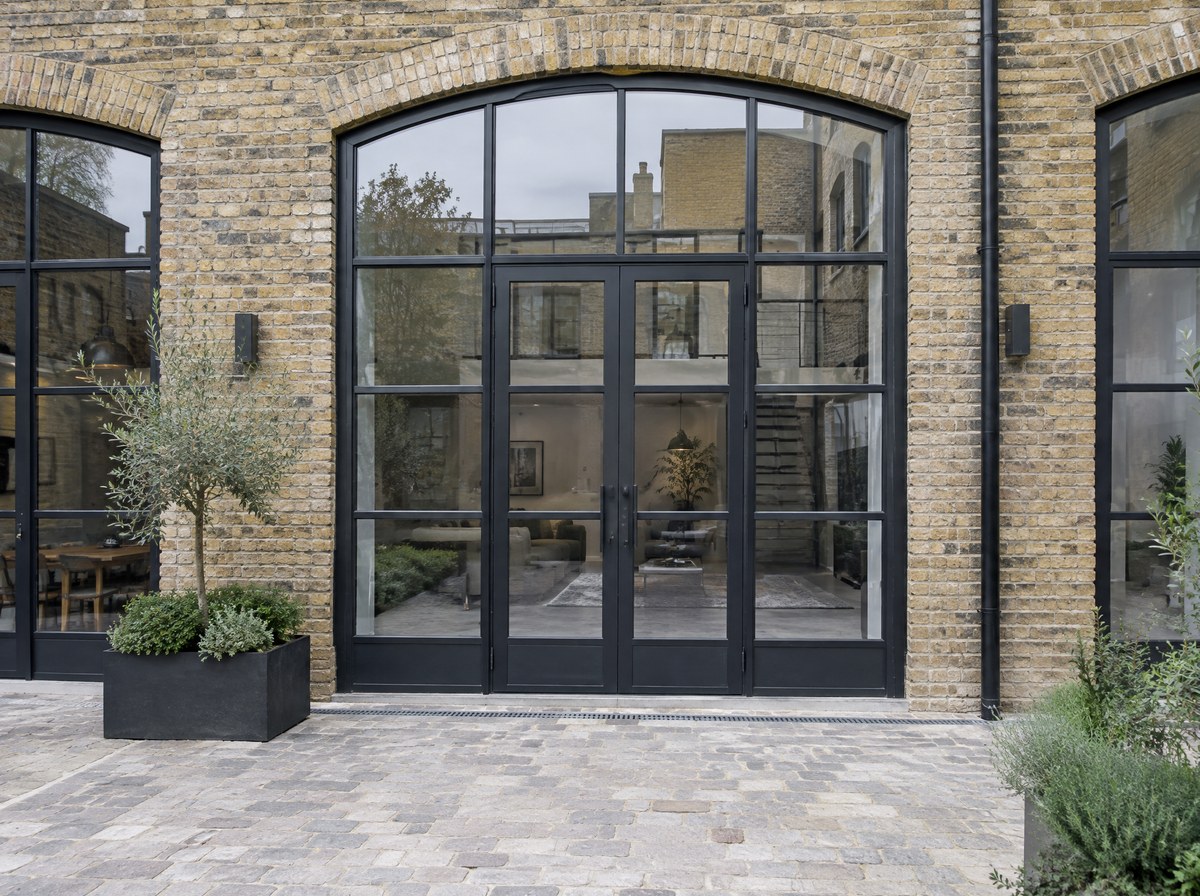
Configurations
Tight angled shot straight through two adjacent panes in one steel screen, clear on the left and reeded on the right, with a hand held flat behind the glass so the difference in distortion reads at a glance.
4:3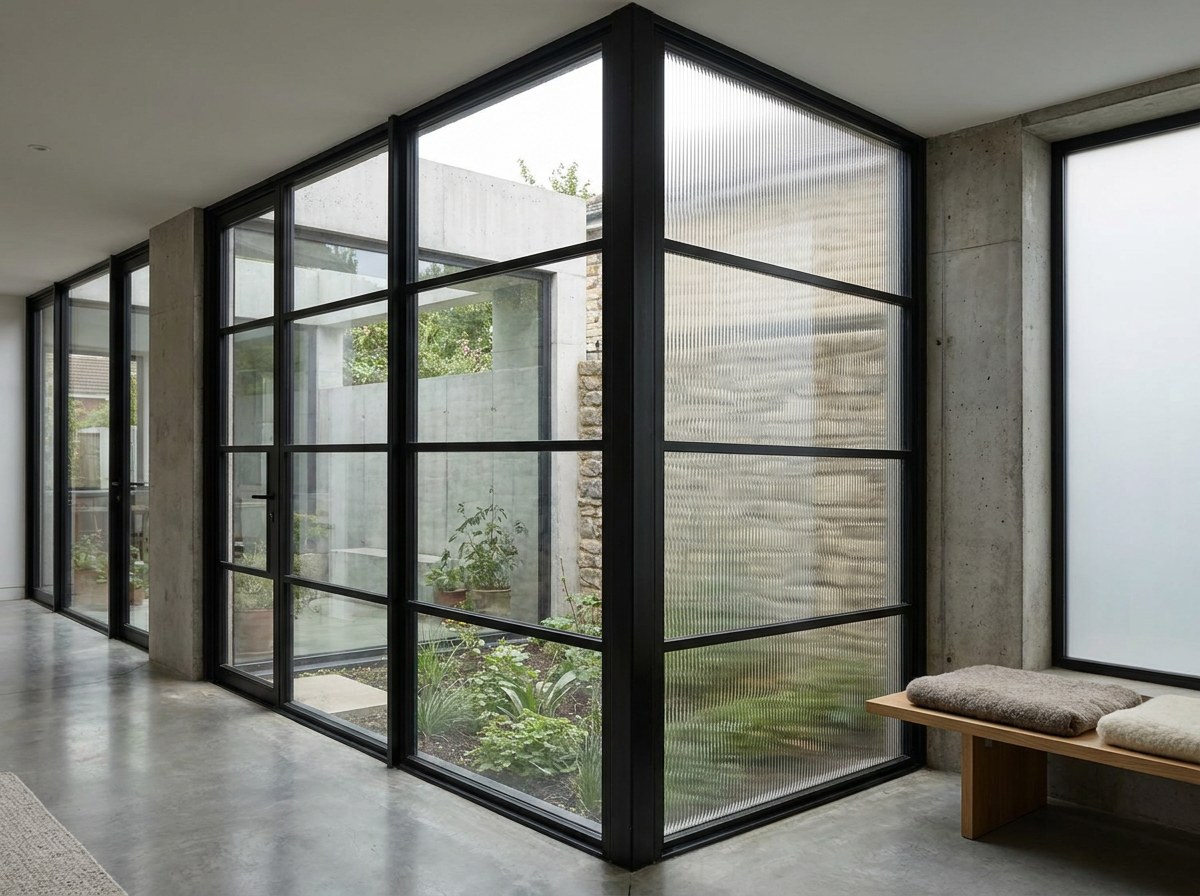
Glass
Macro of one welded frame corner on grey concrete where the matt black powder coat has been ground back through to the galvanising, the bright zinc spangle sitting hard against the RAL 9005 either side of the cut.
4:3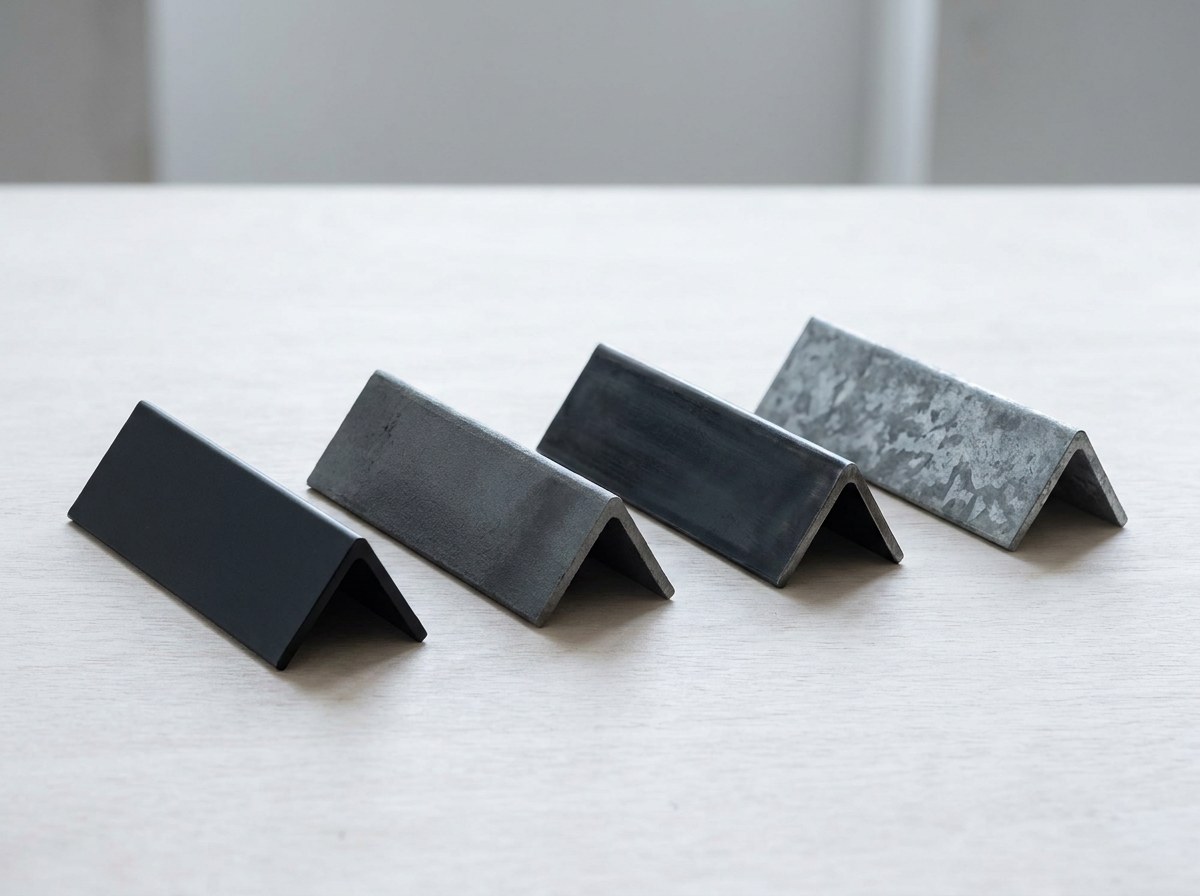
Finishes
Hip-height detail of a monkey-tail handle and mortice escutcheon on a closed steel leaf, shallow depth of field, a thumb resting on the lever so the scale and the wear on the aged brass both read.
4:3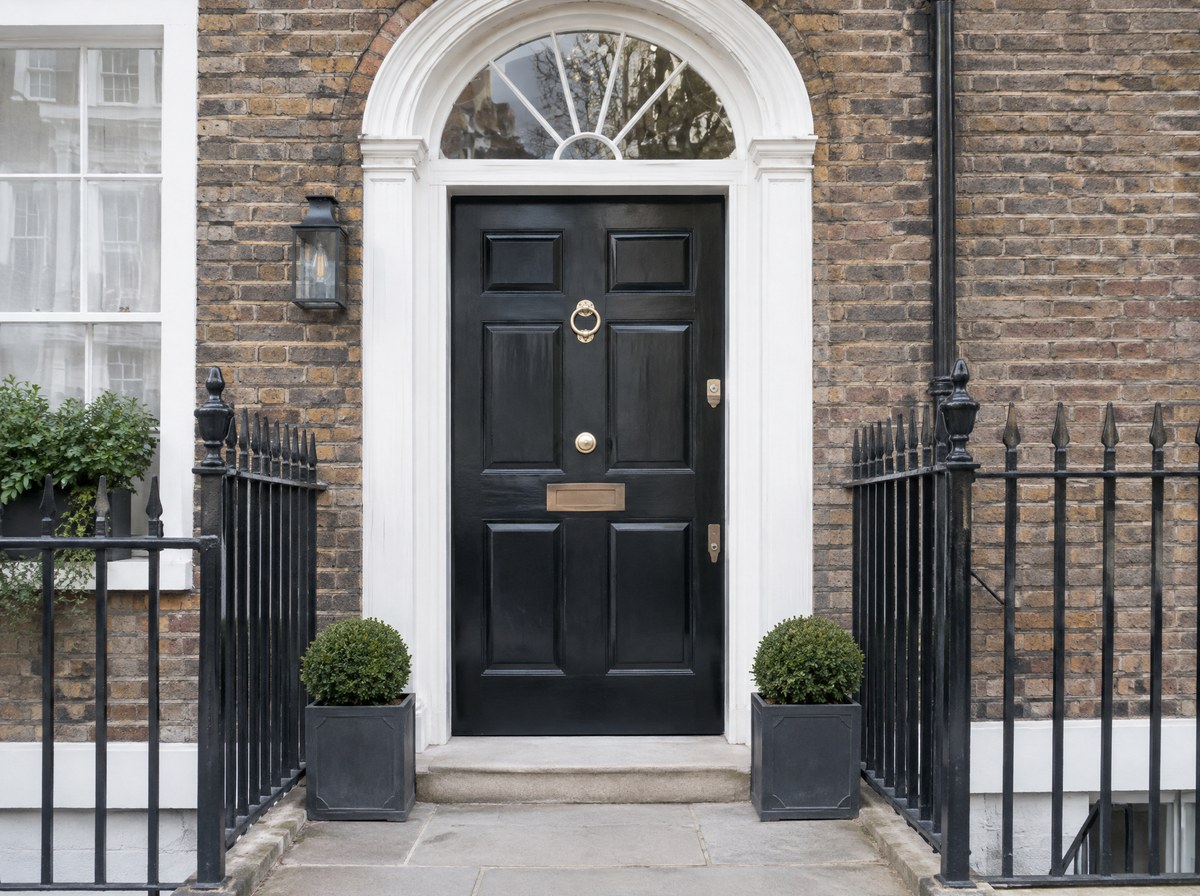
Hardware
Over-the-shoulder view of a specifier's desk: an A1 section drawing weighted flat at one corner, a laptop open on the same detail in DWG, and a 200 mm offcut of thermally broken steel section holding down the other edge of the sheet.
4:3
Specifications
How to choose
Settle these five in build order, not in the order they interest you
Configurations come first, because the steelwork is welded once. Leaf count, opening direction, transom heights and side screens cannot be changed after fabrication. Glass is second: unit thickness sets the rebate, and the rebate sets the section, so a late switch from 6.8 mm laminate to a 44 mm triple unit means a new frame. Hardware is third.
Mortices, hinge positions and lock cases are cut into the steel before it goes to the coating line, so a handle picked after week two has to fit mortices already made. Finishes are fourth and the most forgiving: a standard RAL can be confirmed up to two weeks after order. Specifications are not a choice at all; ask for the pack at the start if you are writing a tender, because whole-window U-values and PAS 24 evidence change what you are allowed to schedule. If you only have time to get one thing right, get configurations right.
Handles unscrew. Welds do not.
Compare the range
- What it settles
- Configurations: how it opens. Glass: what you see through. Finishes: how long the steel lasts. Hardware: what your hand touches. Specifications: what gets signed off.
- When it must be fixed
- Configurations: at survey. Glass: at survey. Hardware: 5 weeks before install, before welding. Finishes: up to 2 weeks after order. Specifications: at tender stage.
- Governing number
- Configurations: leaf to 1100 x 2600 mm. Glass: 44 dB with triple glazing. Finishes: 60 to 80 microns of powder over 45 to 85 microns of zinc. Hardware: 120 kg hinge load per leaf. Specifications: Uw to BS EN ISO 10077-2.
- Changeable after install
- Configurations: no. Glass: pane replacement only, same thickness. Finishes: no, factory applied. Hardware: yes, handles and cylinders swap out. Specifications: reissued at no charge.
- Effect on lead time
- Configurations: none within 6 to 8 weeks. Glass: specials add 2 weeks. Finishes: custom colour match adds 1 week. Hardware: none if confirmed on time. Specifications: 10 working days, runs in parallel.
Questions
Can I change the hardware finish after the doors are made?
Yes. Handles, escutcheons and cylinders unscrew and can be swapped at any point, including years later. The steel finish cannot. It is powder coated in the factory over galvanising, and recoating means removing the frame.
Do internal steel doors need to be galvanised?
No. Internal frames take a zinc-rich primer under the powder coat, which is enough for a dry interior. Galvanising to BS EN ISO 1461 is specified for anything external, for bathrooms and pool rooms, and for any address within 5 km of salt water.
How thick is the glass in a steel screen?
Internal screens are glazed with 6.8 mm laminate into a 12 mm rebate, held by putty line or a slim steel bead. External and thermally broken sections take sealed units from 24 mm double to 44 mm triple. The two are not interchangeable in the same section.
Will steel meet Building Regulations for U-values?
External thermally broken steel starts at Uw 1.4 W/m2K, which meets the replacement window standard. Internal screens sit inside the heated envelope and carry no U-value requirement. Sharp quotes whole-window figures calculated to BS EN ISO 10077-2, never centre-pane.
Can you match a colour that is not in the RAL range?
Yes. 213 RAL colours are standard and add nothing to the lead time. A BS 4800 reference or a physical sample can be matched by the coater and adds about one week. Inside and outside can be different colours on any external system.
What do I send my architect?
The specification pack: 1:5 sections, 1:20 elevations, DWG, DXF, RVT and PDF files, whole-window U-values, and test evidence for PAS 24, BS 6375-1 and BS 5516-2. It is issued in 10 working days and reissued free when the design changes.