Steel or aluminium internal doors?
Steel if you want the 25 mm sightline and are dividing space inside; aluminium if the opening is external or the budget is fixed. Steel holds a thinner section because the metal is stronger, so the glass reads as a wall of light with a pencil line around it. Aluminium cannot get below about 45 mm internally and costs materially less.
Which applies to you
- A hallway or kitchen partition you want to disappear
Steel. 25 mm sightlines and leaves to 1100 x 2600 mm mean a three-panel screen crosses a 3 m opening with two visible lines.
- An external opening
Aluminium, or Sharp Steel external. Internal steel systems are not weather-rated; the external steel range is a different product with a thermal break and drainage.
- You are matching an existing Crittall-style window
Steel, in an arched or square head to the surveyed profile. The section matches; aluminium will read as an approximation.
- Budget is the deciding factor
Aluminium. Internal steel is a hand-welded product and prices accordingly. If the sightline is not the reason you are doing the work, the money is better spent on the glass.
The figures behind it
- Internal sightline
- Steel 25 mm · Aluminium about 45 mm
- Maximum leaf
- Steel 1100 x 2600 mm · Aluminium 1000 x 2400 mm
- Weather rated
- Internal steel no · External steel yes · Aluminium yes
- Finish
- Both 213 RAL; aluminium also anodised
Products this points at
Projects that used these products
Steel entrance door shot square from the front path in flat overcast light, side panel and top light both lit from inside, tiled path leading the eye in.
4:3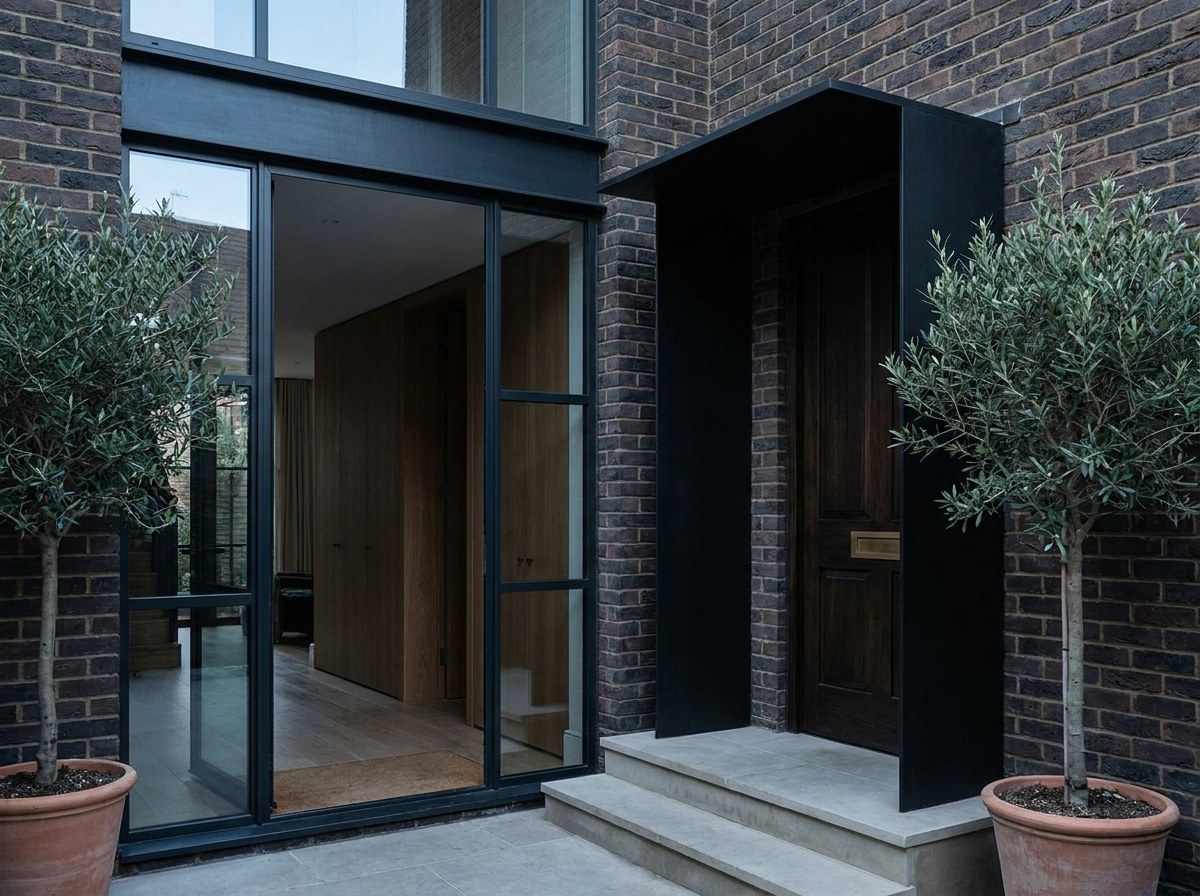
Chiswick steel
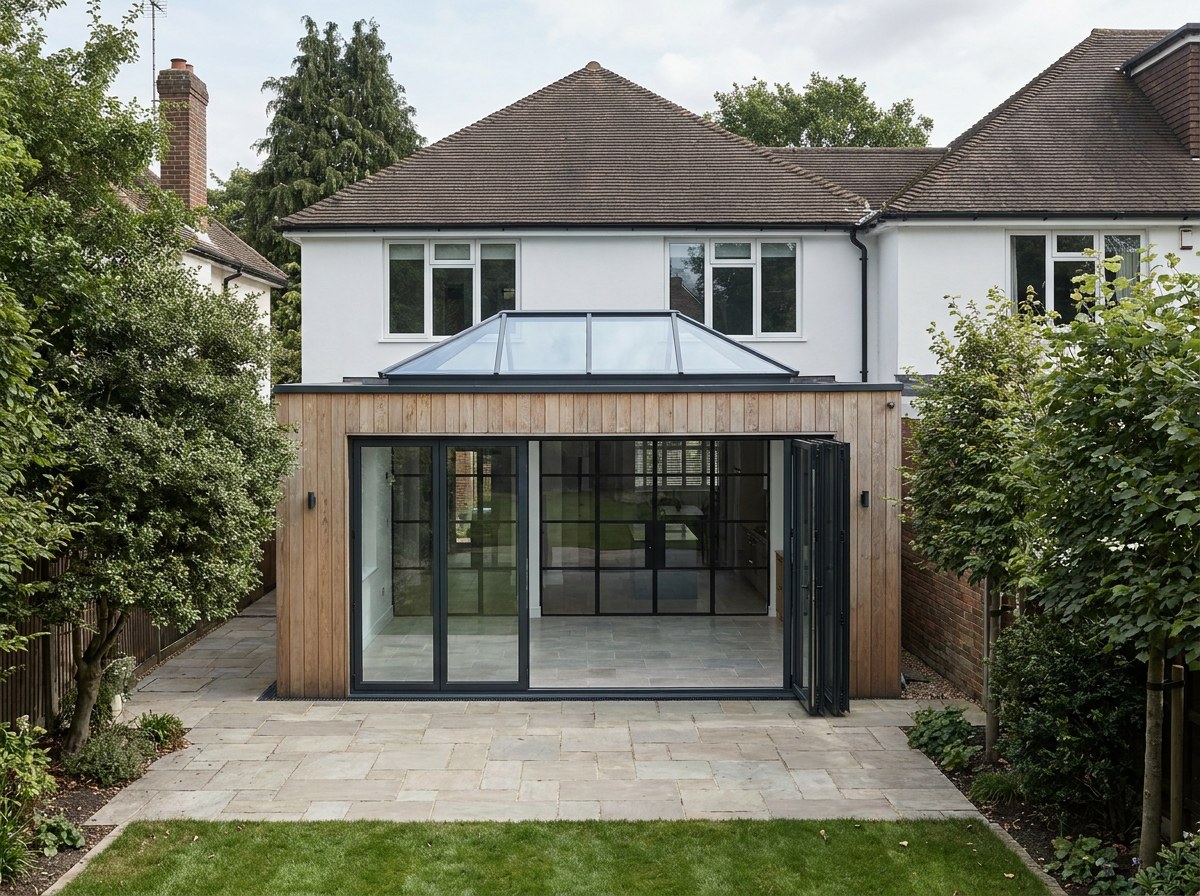
The rear elevation at dusk from the far end of the lawn, the five-leaf bi-fold fully open and the kitchen lit, the roof lantern glowing above the flat roof, the black steel screen visible through the opening.
4:3